November 11, 2026
November 2026 – Energy News
Market Summary
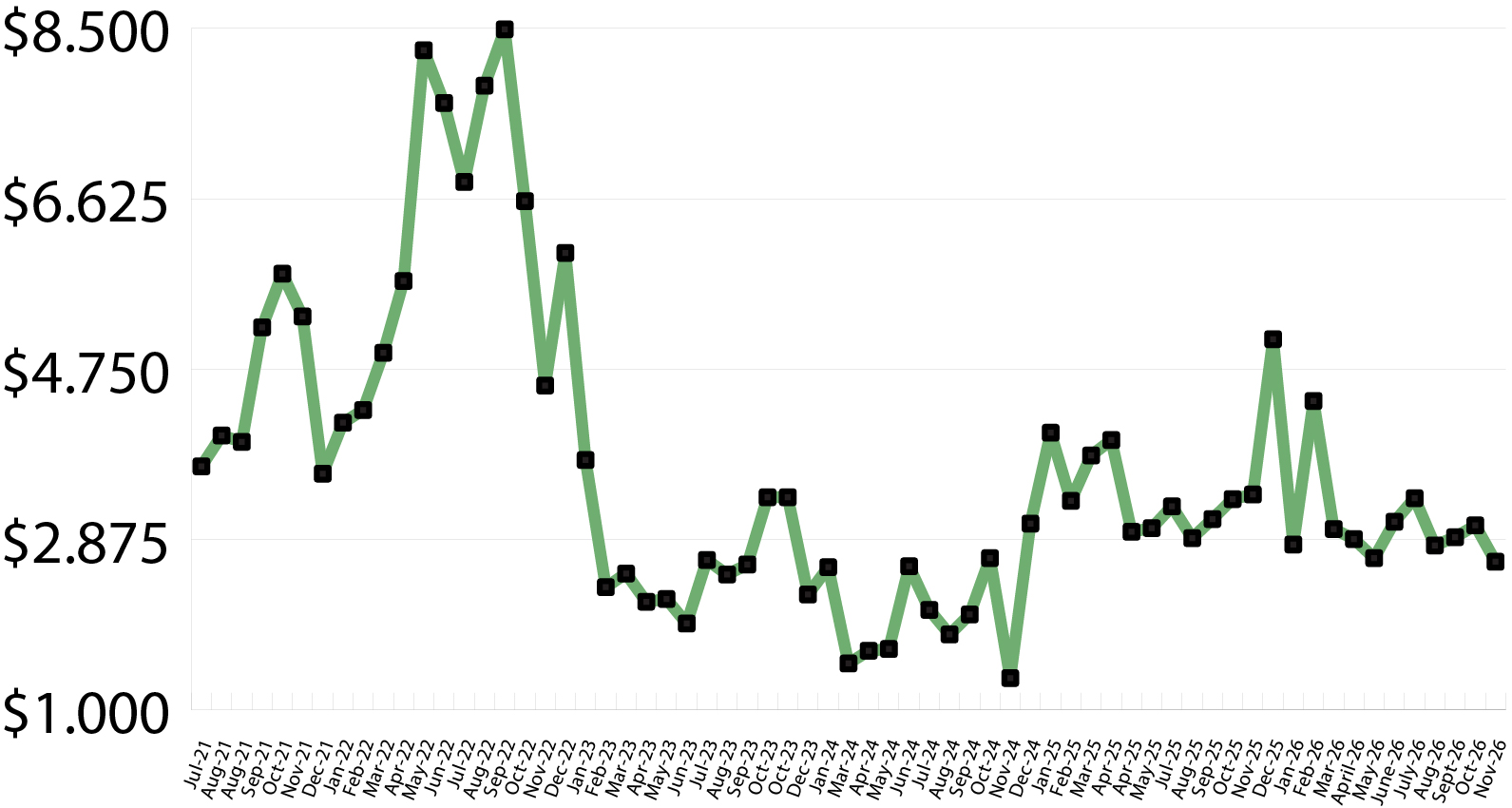
Prices swung both ways this past month. Henry Hub futures fell to a six-month low of $2.60/MMBtu on October 26, then jumped more than 7% to about $3.22 on November 9 on colder forecasts. The bigger picture still points lower: the EIA’s November outlook, released November 10, cut its November–March Henry Hub forecast to $2.87/MMBtu, 36% below last winter, citing a warm start to the season and rising production. Winter costs should come in below last year, though cold snaps can still cause short-lived price spikes.
Domestic Demand
Mild weather has kept heating demand in check, with October 14% warmer than the 10-year average. The EIA expects home and business gas use this winter to fall 3.8% from last winter. Power generation continues to provide steady support, with gas use for electricity running about 5% above last year in October.
International Demand
Global markets remain tight, with Strait of Hormuz shipping still disrupted and European storage about 72% full versus nearly 83% a year ago. U.S. LNG feed gas set another record at about 19.3 Bcf/d so far in November, and the EIA expects exports to reach 19.0 Bcf/d in 2027 as Corpus Christi and Golden Pass ramp up. With U.S. terminals near full capacity, global swings have limited effect on domestic prices.
Production & Supply
Production remains near record levels at about 112.1 Bcf/d, and the EIA expects growth to 117.6 Bcf/d in 2027, the main reason it cut its 2027 Henry Hub forecast to $2.88/MMBtu. Storage stood at 3,801 Bcf on October 30, 1.4% above the five-year average. Weather is the wildcard: NOAA favors a warmer-than-average winter across the Midwest, northern tier, and much of the East as a near-record El Niño builds. Heading into December, watch NOAA’s November 12 El Niño update, weekly storage reports, and any sustained cold spell.
Market Data:
November 11, 2026

November 2026 – Energy News
November 11, 2026
Market Summary
Prices swung both ways this past month. Henry Hub futures fell to a six-month low of $2.60/MMBtu on October 26, then jumped more than 7% to about $3.22 on November 9 on colder forecasts. The bigger picture still points lower: the EIA’s November outlook, released November 10, cut its November–March Henry Hub forecast to $2.87/MMBtu, 36% below last winter, citing a warm start to the season and rising production. Winter costs should come in below last year, though cold snaps can still cause short-lived price spikes.
Domestic Demand
Mild weather has kept heating demand in check, with October 14% warmer than the 10-year average. The EIA expects home and business gas use this winter to fall 3.8% from last winter. Power generation continues to provide steady support, with gas use for electricity running about 5% above last year in October.
International Demand
Global markets remain tight, with Strait of Hormuz shipping still disrupted and European storage about 72% full versus nearly 83% a year ago. U.S. LNG feed gas set another record at about 19.3 Bcf/d so far in November, and the EIA expects exports to reach 19.0 Bcf/d in 2027 as Corpus Christi and Golden Pass ramp up. With U.S. terminals near full capacity, global swings have limited effect on domestic prices.
Production & Supply
Production remains near record levels at about 112.1 Bcf/d, and the EIA expects growth to 117.6 Bcf/d in 2027, the main reason it cut its 2027 Henry Hub forecast to $2.88/MMBtu. Storage stood at 3,801 Bcf on October 30, 1.4% above the five-year average. Weather is the wildcard: NOAA favors a warmer-than-average winter across the Midwest, northern tier, and much of the East as a near-record El Niño builds. Heading into December, watch NOAA’s November 12 El Niño update, weekly storage reports, and any sustained cold spell.
Market Data:
November 11, 2026
November 11, 2026
November 2026 – Energy News
Market Summary
Prices swung both ways this past month. Henry Hub futures fell to a six-month low of $2.60/MMBtu on October 26, then jumped more than 7% to about $3.22 on November 9 on colder forecasts. The bigger picture still points lower: the EIA’s November outlook, released November 10, cut its November–March Henry Hub forecast to $2.87/MMBtu, 36% below last winter, citing a warm start to the season and rising production. Winter costs should come in below last year, though cold snaps can still cause short-lived price spikes.
Domestic Demand
Mild weather has kept heating demand in check, with October 14% warmer than the 10-year average. The EIA expects home and business gas use this winter to fall 3.8% from last winter. Power generation continues to provide steady support, with gas use for electricity running about 5% above last year in October.
International Demand
Global markets remain tight, with Strait of Hormuz shipping still disrupted and European storage about 72% full versus nearly 83% a year ago. U.S. LNG feed gas set another record at about 19.3 Bcf/d so far in November, and the EIA expects exports to reach 19.0 Bcf/d in 2027 as Corpus Christi and Golden Pass ramp up. With U.S. terminals near full capacity, global swings have limited effect on domestic prices.
Production & Supply
Production remains near record levels at about 112.1 Bcf/d, and the EIA expects growth to 117.6 Bcf/d in 2027, the main reason it cut its 2027 Henry Hub forecast to $2.88/MMBtu. Storage stood at 3,801 Bcf on October 30, 1.4% above the five-year average. Weather is the wildcard: NOAA favors a warmer-than-average winter across the Midwest, northern tier, and much of the East as a near-record El Niño builds. Heading into December, watch NOAA’s November 12 El Niño update, weekly storage reports, and any sustained cold spell.
November 11, 2026
November 2026 – Energy News
Market Summary
Prices swung both ways this past month. Henry Hub futures fell to a six-month low of $2.60/MMBtu on October 26, then jumped more than 7% to about $3.22 on November 9 on colder forecasts. The bigger picture still points lower: the EIA’s November outlook, released November 10, cut its November–March Henry Hub forecast to $2.87/MMBtu, 36% below last winter, citing a warm start to the season and rising production. Winter costs should come in below last year, though cold snaps can still cause short-lived price spikes.
Domestic Demand
Mild weather has kept heating demand in check, with October 14% warmer than the 10-year average. The EIA expects home and business gas use this winter to fall 3.8% from last winter. Power generation continues to provide steady support, with gas use for electricity running about 5% above last year in October.
International Demand
Global markets remain tight, with Strait of Hormuz shipping still disrupted and European storage about 72% full versus nearly 83% a year ago. U.S. LNG feed gas set another record at about 19.3 Bcf/d so far in November, and the EIA expects exports to reach 19.0 Bcf/d in 2027 as Corpus Christi and Golden Pass ramp up. With U.S. terminals near full capacity, global swings have limited effect on domestic prices.
Production & Supply
Production remains near record levels at about 112.1 Bcf/d, and the EIA expects growth to 117.6 Bcf/d in 2027, the main reason it cut its 2027 Henry Hub forecast to $2.88/MMBtu. Storage stood at 3,801 Bcf on October 30, 1.4% above the five-year average. Weather is the wildcard: NOAA favors a warmer-than-average winter across the Midwest, northern tier, and much of the East as a near-record El Niño builds. Heading into December, watch NOAA’s November 12 El Niño update, weekly storage reports, and any sustained cold spell.
November 11, 2026
November 2026 – Energy News
Market Summary
Prices swung both ways this past month. Henry Hub futures fell to a six-month low of $2.60/MMBtu on October 26, then jumped more than 7% to about $3.22 on November 9 on colder forecasts. The bigger picture still points lower: the EIA’s November outlook, released November 10, cut its November–March Henry Hub forecast to $2.87/MMBtu, 36% below last winter, citing a warm start to the season and rising production. Winter costs should come in below last year, though cold snaps can still cause short-lived price spikes.
Domestic Demand
Mild weather has kept heating demand in check, with October 14% warmer than the 10-year average. The EIA expects home and business gas use this winter to fall 3.8% from last winter. Power generation continues to provide steady support, with gas use for electricity running about 5% above last year in October.
International Demand
Global markets remain tight, with Strait of Hormuz shipping still disrupted and European storage about 72% full versus nearly 83% a year ago. U.S. LNG feed gas set another record at about 19.3 Bcf/d so far in November, and the EIA expects exports to reach 19.0 Bcf/d in 2027 as Corpus Christi and Golden Pass ramp up. With U.S. terminals near full capacity, global swings have limited effect on domestic prices.
Production & Supply
Production remains near record levels at about 112.1 Bcf/d, and the EIA expects growth to 117.6 Bcf/d in 2027, the main reason it cut its 2027 Henry Hub forecast to $2.88/MMBtu. Storage stood at 3,801 Bcf on October 30, 1.4% above the five-year average. Weather is the wildcard: NOAA favors a warmer-than-average winter across the Midwest, northern tier, and much of the East as a near-record El Niño builds. Heading into December, watch NOAA’s November 12 El Niño update, weekly storage reports, and any sustained cold spell.

November 11, 2026
Market Summary
Prices swung both ways this past month. Henry Hub futures fell to a six-month low of $2.60/MMBtu on October 26, then jumped more than 7% to about $3.22 on November 9 on colder forecasts. The bigger picture still points lower: the EIA’s November outlook, released November 10, cut its November–March Henry Hub forecast to $2.87/MMBtu, 36% below last winter, citing a warm start to the season and rising production. Winter costs should come in below last year, though cold snaps can still cause short-lived price spikes.
Domestic Demand
Mild weather has kept heating demand in check, with October 14% warmer than the 10-year average. The EIA expects home and business gas use this winter to fall 3.8% from last winter. Power generation continues to provide steady support, with gas use for electricity running about 5% above last year in October.
International Demand
Global markets remain tight, with Strait of Hormuz shipping still disrupted and European storage about 72% full versus nearly 83% a year ago. U.S. LNG feed gas set another record at about 19.3 Bcf/d so far in November, and the EIA expects exports to reach 19.0 Bcf/d in 2027 as Corpus Christi and Golden Pass ramp up. With U.S. terminals near full capacity, global swings have limited effect on domestic prices.
Production & Supply
Production remains near record levels at about 112.1 Bcf/d, and the EIA expects growth to 117.6 Bcf/d in 2027, the main reason it cut its 2027 Henry Hub forecast to $2.88/MMBtu. Storage stood at 3,801 Bcf on October 30, 1.4% above the five-year average. Weather is the wildcard: NOAA favors a warmer-than-average winter across the Midwest, northern tier, and much of the East as a near-record El Niño builds. Heading into December, watch NOAA’s November 12 El Niño update, weekly storage reports, and any sustained cold spell.
November 11, 2026
November 2026 – Energy News
Market Summary
Prices swung both ways this past month. Henry Hub futures fell to a six-month low of $2.60/MMBtu on October 26, then jumped more than 7% to about $3.22 on November 9 on colder forecasts. The bigger picture still points lower: the EIA’s November outlook, released November 10, cut its November–March Henry Hub forecast to $2.87/MMBtu, 36% below last winter, citing a warm start to the season and rising production. Winter costs should come in below last year, though cold snaps can still cause short-lived price spikes.
Domestic Demand
Mild weather has kept heating demand in check, with October 14% warmer than the 10-year average. The EIA expects home and business gas use this winter to fall 3.8% from last winter. Power generation continues to provide steady support, with gas use for electricity running about 5% above last year in October.
International Demand
Global markets remain tight, with Strait of Hormuz shipping still disrupted and European storage about 72% full versus nearly 83% a year ago. U.S. LNG feed gas set another record at about 19.3 Bcf/d so far in November, and the EIA expects exports to reach 19.0 Bcf/d in 2027 as Corpus Christi and Golden Pass ramp up. With U.S. terminals near full capacity, global swings have limited effect on domestic prices.
Production & Supply
Production remains near record levels at about 112.1 Bcf/d, and the EIA expects growth to 117.6 Bcf/d in 2027, the main reason it cut its 2027 Henry Hub forecast to $2.88/MMBtu. Storage stood at 3,801 Bcf on October 30, 1.4% above the five-year average. Weather is the wildcard: NOAA favors a warmer-than-average winter across the Midwest, northern tier, and much of the East as a near-record El Niño builds. Heading into December, watch NOAA’s November 12 El Niño update, weekly storage reports, and any sustained cold spell.
November 11, 2026
November 2026 – Energy News
Market Summary
Prices swung both ways this past month. Henry Hub futures fell to a six-month low of $2.60/MMBtu on October 26, then jumped more than 7% to about $3.22 on November 9 on colder forecasts. The bigger picture still points lower: the EIA’s November outlook, released November 10, cut its November–March Henry Hub forecast to $2.87/MMBtu, 36% below last winter, citing a warm start to the season and rising production. Winter costs should come in below last year, though cold snaps can still cause short-lived price spikes.
Domestic Demand
Mild weather has kept heating demand in check, with October 14% warmer than the 10-year average. The EIA expects home and business gas use this winter to fall 3.8% from last winter. Power generation continues to provide steady support, with gas use for electricity running about 5% above last year in October.
International Demand
Global markets remain tight, with Strait of Hormuz shipping still disrupted and European storage about 72% full versus nearly 83% a year ago. U.S. LNG feed gas set another record at about 19.3 Bcf/d so far in November, and the EIA expects exports to reach 19.0 Bcf/d in 2027 as Corpus Christi and Golden Pass ramp up. With U.S. terminals near full capacity, global swings have limited effect on domestic prices.
Production & Supply
Production remains near record levels at about 112.1 Bcf/d, and the EIA expects growth to 117.6 Bcf/d in 2027, the main reason it cut its 2027 Henry Hub forecast to $2.88/MMBtu. Storage stood at 3,801 Bcf on October 30, 1.4% above the five-year average. Weather is the wildcard: NOAA favors a warmer-than-average winter across the Midwest, northern tier, and much of the East as a near-record El Niño builds. Heading into December, watch NOAA’s November 12 El Niño update, weekly storage reports, and any sustained cold spell.
Make Your Choice Gas Selection in Three Easy Steps
Click here to access our online tool, or call our Choice gas commodity experts at 1 (877) 790-4990.
Step 1: Enter your account number
- Your Black Hills Energy account number is located at the top right-hand corner of your bill.
Step 2: Review price options and make your selection
Step 3: Confirm your selection and enter your control number
- You received a control number in your 2026 Choice Gas selection packet mailed to you from Black Hills Energy. If you cannot locate this, you can retrieve your control number by calling 877-245-3506 or visit choicegas.com
Once enrolled, you will be removed from supplier marketing communications within 24 hours.


Sign Up for Our Energy Newsletters
Sign UpRecent Posts