January 30, 2026
Weekly Energy News
Market Commentary: After the US Energy Information Administration (EIA) storage release, the NYMEX March contract initially dipped but then bounced back to $3.90 per million British thermal units (MMBtu) by early afternoon on January 29, marking a 16-cent increase from the previous settlement, according to CME Group data. In the last two weeks, March has risen by over $1.28/MMBtu. However, this recent gain is modest compared to the February contract, which settled at $7.46/MMBtu upon its expiration on January 28, as noted in Platts data.
MAR26’ NYMEX closed Thursday at $3.918 (up $0.106)
• High for the day $4.037
• Low for the day $3.818
Early trading for the prompt month is trading at $4.024
• https://www.cmegroup.com/markets/energy/natural-gas/natural-gas.html
• https://www.fxempire.com/commodities/natural-gas
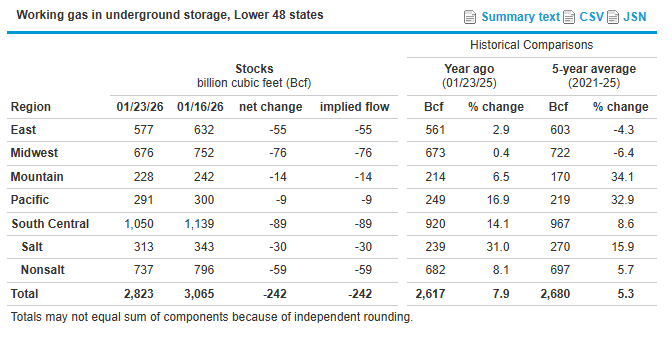
EIA Storage: The EIA reported a larger-than-expected withdrawal from gas storage inventories for the week ending January 23. Extreme cold weather increased demand and caused production disruptions, leading to a possible record pull for the week ending January 30. According to the EIA's estimate released on January 29, the US withdrew 242 billion cubic feet (Bcf) from storage. This figure exceeded the consensus estimate of 231 Bcf from Platts' weekly gas storage survey, part of S&P Global Energy. The withdrawal stands out as bullish compared to the five-year average of 208 Bcf, although it is significantly lower than the 307 Bcf draw recorded in the same week of 2025, based on EIA data. This estimate reduces stocks to 2.823 trillion cubic feet as of January 23. The surplus over the five-year average narrowed to 143 Bcf, or 5 percent, while the surplus compared to last year’s levels rose to 206 Bcf, or 8 percent, according to EIA data.
Working gas in underground storage, Lower 48 states
Summary
Working gas in storage was 2,823 Bcf as of Friday, January 23, 2026, according to EIA estimates. This represents a net decrease of 242 Bcf from the previous week. Stocks were 206 Bcf higher than last year at this time and 143 Bcf above the five-year average of 2,680 Bcf. At 2,823 Bcf, total working gas is within the five-year historical range.
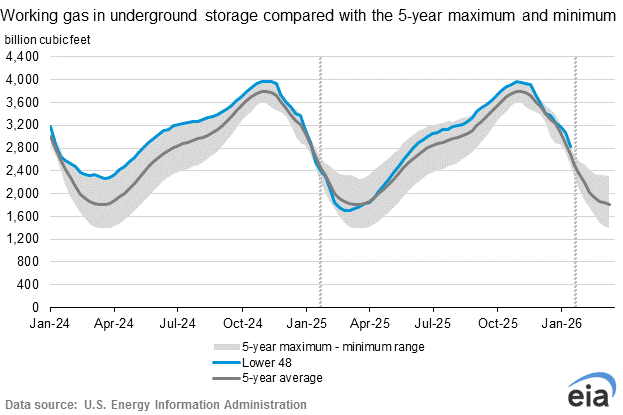
Note: The shaded area indicates the rangebetween the historical minimum and maximum values for the weekly series from2021 through 2025. The dashed vertical lines indicate current and year-agoweekly periods.
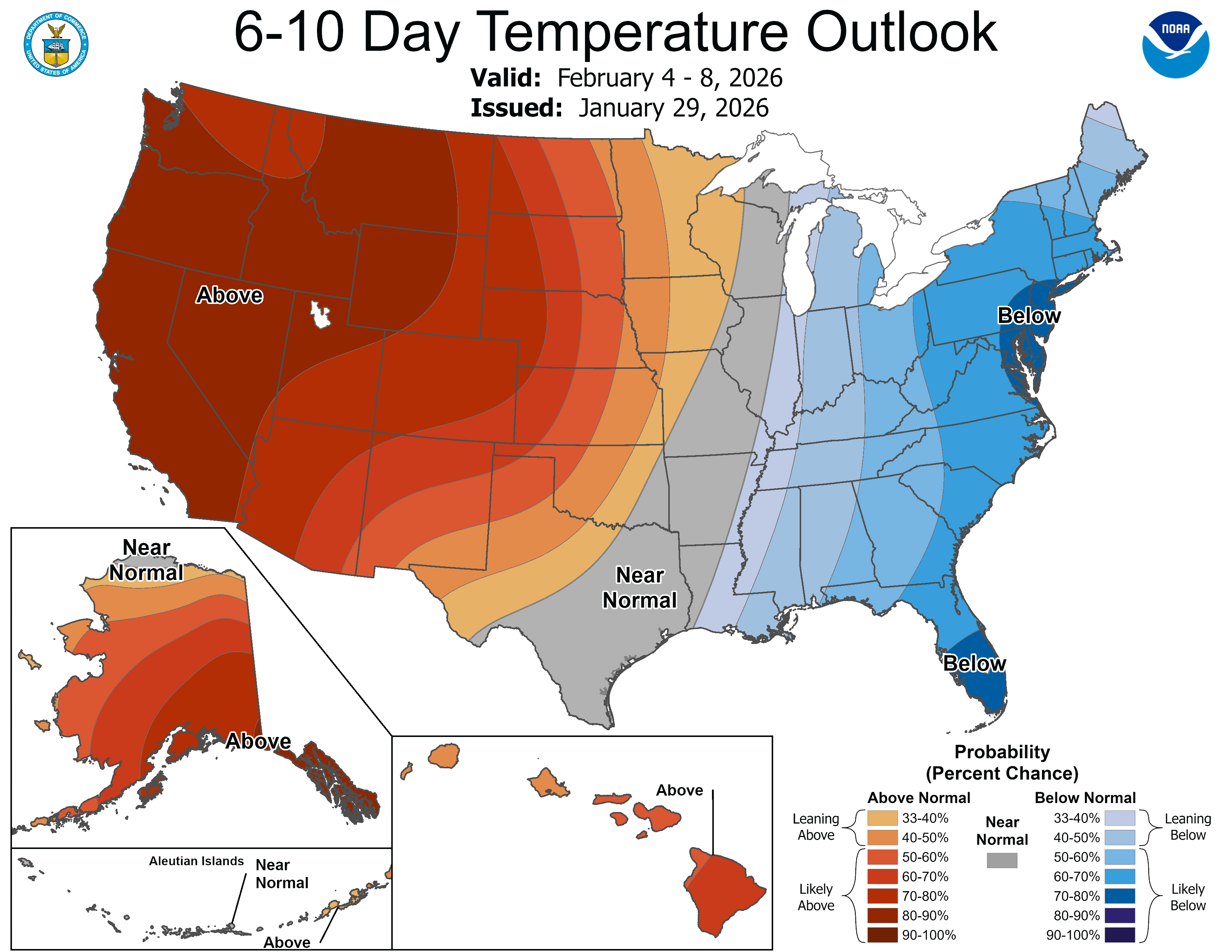
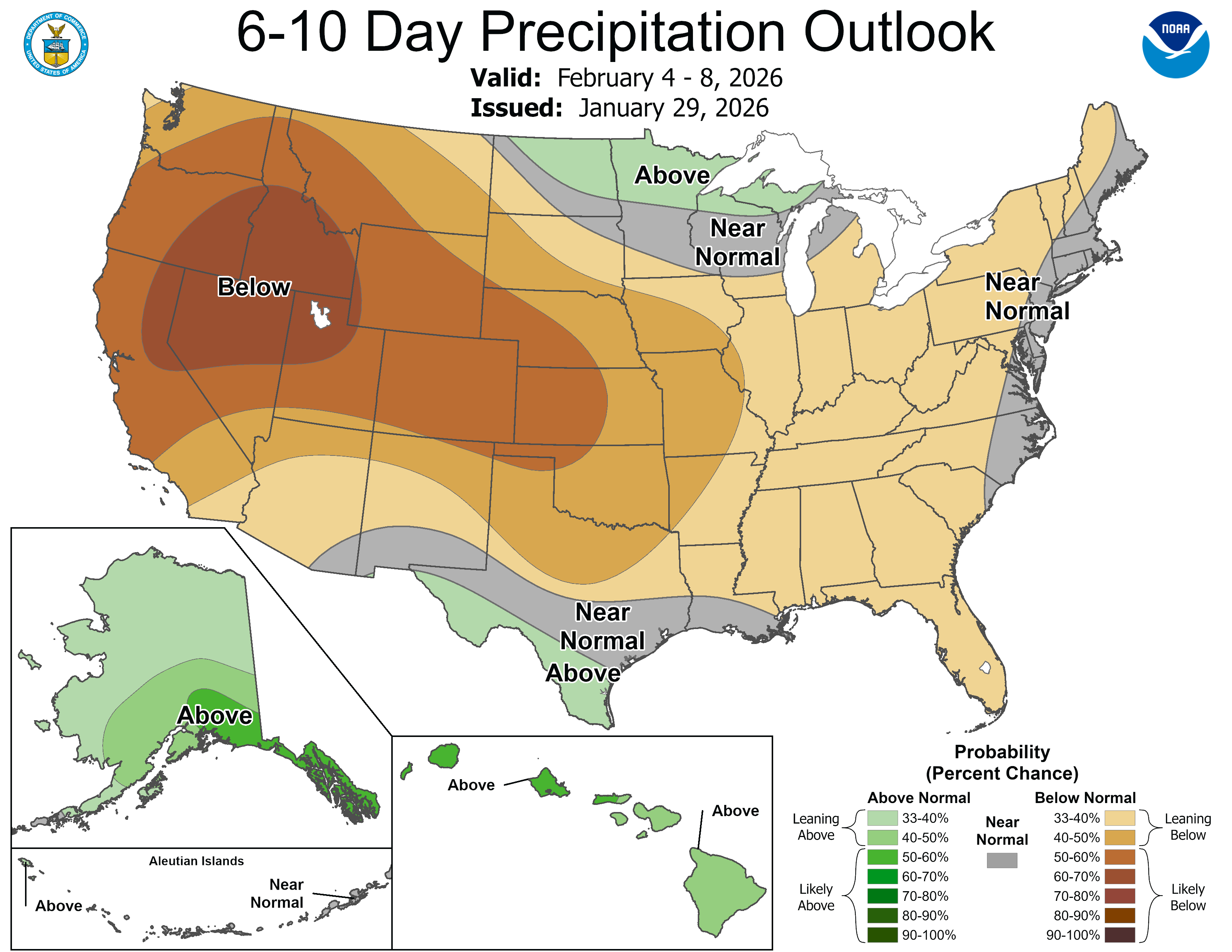
Weather: Winter has taken hold across much of the Midwest and East. After December and early January's fluctuating temperatures, forecasts now predict daily highs will range from 10 to 30 degrees Fahrenheit below historical averages, with only brief periods of warmth. From January 17 to 28, Minneapolis recorded an average of 15.2 degrees below normal, Chicago 14.5, Detroit 13.3, St. Louis 12.6, and Pittsburgh and Nashville at 12.3 and 11.1 degrees below, respectively. Even the Northeast coastal areas experienced temperatures about 5 degrees below normal, despite a short warm-up.
Early February will bring a warmer period, but the Midwest likely hasn't seen the last of significant winter storms. Recent models indicate changes in the upper-air pattern that favor snowfall. A ridge is forming in the Gulf of Alaska, which, along with other weather patterns, could lead to colder temperatures for a couple of weeks. There is a strong possibility of substantial snowfall between February 10th and 18th, with the Euro model predicting a trough entering the Plains around the 10th. This aligns with earlier forecasts of a warming trend followed by colder conditions. While there is no guarantee that Des Moines will experience a winter storm on the 11th, the indicators suggest that one or two winter storms may occur as we approach mid-February. Midwest Weather. “Winter Storm Risks Middle of February.” Midwest Weather (Substack), 2026. Subscriber-only newsletter.
Market Data:
January 30, 2026

Weekly Energy News
January 30, 2026
Market Commentary: After the US Energy Information Administration (EIA) storage release, the NYMEX March contract initially dipped but then bounced back to $3.90 per million British thermal units (MMBtu) by early afternoon on January 29, marking a 16-cent increase from the previous settlement, according to CME Group data. In the last two weeks, March has risen by over $1.28/MMBtu. However, this recent gain is modest compared to the February contract, which settled at $7.46/MMBtu upon its expiration on January 28, as noted in Platts data.
MAR26’ NYMEX closed Thursday at $3.918 (up $0.106)
• High for the day $4.037
• Low for the day $3.818
Early trading for the prompt month is trading at $4.024
• https://www.cmegroup.com/markets/energy/natural-gas/natural-gas.html
• https://www.fxempire.com/commodities/natural-gas
EIA Storage: The EIA reported a larger-than-expected withdrawal from gas storage inventories for the week ending January 23. Extreme cold weather increased demand and caused production disruptions, leading to a possible record pull for the week ending January 30. According to the EIA's estimate released on January 29, the US withdrew 242 billion cubic feet (Bcf) from storage. This figure exceeded the consensus estimate of 231 Bcf from Platts' weekly gas storage survey, part of S&P Global Energy. The withdrawal stands out as bullish compared to the five-year average of 208 Bcf, although it is significantly lower than the 307 Bcf draw recorded in the same week of 2025, based on EIA data. This estimate reduces stocks to 2.823 trillion cubic feet as of January 23. The surplus over the five-year average narrowed to 143 Bcf, or 5 percent, while the surplus compared to last year’s levels rose to 206 Bcf, or 8 percent, according to EIA data.
Working gas in underground storage, Lower 48 states
Summary
Working gas in storage was 2,823 Bcf as of Friday, January 23, 2026, according to EIA estimates. This represents a net decrease of 242 Bcf from the previous week. Stocks were 206 Bcf higher than last year at this time and 143 Bcf above the five-year average of 2,680 Bcf. At 2,823 Bcf, total working gas is within the five-year historical range.
Note: The shaded area indicates the rangebetween the historical minimum and maximum values for the weekly series from2021 through 2025. The dashed vertical lines indicate current and year-agoweekly periods.
Weather: Winter has taken hold across much of the Midwest and East. After December and early January's fluctuating temperatures, forecasts now predict daily highs will range from 10 to 30 degrees Fahrenheit below historical averages, with only brief periods of warmth. From January 17 to 28, Minneapolis recorded an average of 15.2 degrees below normal, Chicago 14.5, Detroit 13.3, St. Louis 12.6, and Pittsburgh and Nashville at 12.3 and 11.1 degrees below, respectively. Even the Northeast coastal areas experienced temperatures about 5 degrees below normal, despite a short warm-up.
Early February will bring a warmer period, but the Midwest likely hasn't seen the last of significant winter storms. Recent models indicate changes in the upper-air pattern that favor snowfall. A ridge is forming in the Gulf of Alaska, which, along with other weather patterns, could lead to colder temperatures for a couple of weeks. There is a strong possibility of substantial snowfall between February 10th and 18th, with the Euro model predicting a trough entering the Plains around the 10th. This aligns with earlier forecasts of a warming trend followed by colder conditions. While there is no guarantee that Des Moines will experience a winter storm on the 11th, the indicators suggest that one or two winter storms may occur as we approach mid-February. Midwest Weather. “Winter Storm Risks Middle of February.” Midwest Weather (Substack), 2026. Subscriber-only newsletter.
Market Data:
January 30, 2026
January 30, 2026
Weekly Energy News
Market Commentary: After the US Energy Information Administration (EIA) storage release, the NYMEX March contract initially dipped but then bounced back to $3.90 per million British thermal units (MMBtu) by early afternoon on January 29, marking a 16-cent increase from the previous settlement, according to CME Group data. In the last two weeks, March has risen by over $1.28/MMBtu. However, this recent gain is modest compared to the February contract, which settled at $7.46/MMBtu upon its expiration on January 28, as noted in Platts data.
MAR26’ NYMEX closed Thursday at $3.918 (up $0.106)
• High for the day $4.037
• Low for the day $3.818
Early trading for the prompt month is trading at $4.024
• https://www.cmegroup.com/markets/energy/natural-gas/natural-gas.html
• https://www.fxempire.com/commodities/natural-gas
EIA Storage: The EIA reported a larger-than-expected withdrawal from gas storage inventories for the week ending January 23. Extreme cold weather increased demand and caused production disruptions, leading to a possible record pull for the week ending January 30. According to the EIA's estimate released on January 29, the US withdrew 242 billion cubic feet (Bcf) from storage. This figure exceeded the consensus estimate of 231 Bcf from Platts' weekly gas storage survey, part of S&P Global Energy. The withdrawal stands out as bullish compared to the five-year average of 208 Bcf, although it is significantly lower than the 307 Bcf draw recorded in the same week of 2025, based on EIA data. This estimate reduces stocks to 2.823 trillion cubic feet as of January 23. The surplus over the five-year average narrowed to 143 Bcf, or 5 percent, while the surplus compared to last year’s levels rose to 206 Bcf, or 8 percent, according to EIA data.
Working gas in underground storage, Lower 48 states
Summary
Working gas in storage was 2,823 Bcf as of Friday, January 23, 2026, according to EIA estimates. This represents a net decrease of 242 Bcf from the previous week. Stocks were 206 Bcf higher than last year at this time and 143 Bcf above the five-year average of 2,680 Bcf. At 2,823 Bcf, total working gas is within the five-year historical range.
Note: The shaded area indicates the rangebetween the historical minimum and maximum values for the weekly series from2021 through 2025. The dashed vertical lines indicate current and year-agoweekly periods.
Weather: Winter has taken hold across much of the Midwest and East. After December and early January's fluctuating temperatures, forecasts now predict daily highs will range from 10 to 30 degrees Fahrenheit below historical averages, with only brief periods of warmth. From January 17 to 28, Minneapolis recorded an average of 15.2 degrees below normal, Chicago 14.5, Detroit 13.3, St. Louis 12.6, and Pittsburgh and Nashville at 12.3 and 11.1 degrees below, respectively. Even the Northeast coastal areas experienced temperatures about 5 degrees below normal, despite a short warm-up.
Early February will bring a warmer period, but the Midwest likely hasn't seen the last of significant winter storms. Recent models indicate changes in the upper-air pattern that favor snowfall. A ridge is forming in the Gulf of Alaska, which, along with other weather patterns, could lead to colder temperatures for a couple of weeks. There is a strong possibility of substantial snowfall between February 10th and 18th, with the Euro model predicting a trough entering the Plains around the 10th. This aligns with earlier forecasts of a warming trend followed by colder conditions. While there is no guarantee that Des Moines will experience a winter storm on the 11th, the indicators suggest that one or two winter storms may occur as we approach mid-February. Midwest Weather. “Winter Storm Risks Middle of February.” Midwest Weather (Substack), 2026. Subscriber-only newsletter.
January 30, 2026
Weekly Energy News
Market Commentary: After the US Energy Information Administration (EIA) storage release, the NYMEX March contract initially dipped but then bounced back to $3.90 per million British thermal units (MMBtu) by early afternoon on January 29, marking a 16-cent increase from the previous settlement, according to CME Group data. In the last two weeks, March has risen by over $1.28/MMBtu. However, this recent gain is modest compared to the February contract, which settled at $7.46/MMBtu upon its expiration on January 28, as noted in Platts data.
MAR26’ NYMEX closed Thursday at $3.918 (up $0.106)
• High for the day $4.037
• Low for the day $3.818
Early trading for the prompt month is trading at $4.024
• https://www.cmegroup.com/markets/energy/natural-gas/natural-gas.html
• https://www.fxempire.com/commodities/natural-gas
EIA Storage: The EIA reported a larger-than-expected withdrawal from gas storage inventories for the week ending January 23. Extreme cold weather increased demand and caused production disruptions, leading to a possible record pull for the week ending January 30. According to the EIA's estimate released on January 29, the US withdrew 242 billion cubic feet (Bcf) from storage. This figure exceeded the consensus estimate of 231 Bcf from Platts' weekly gas storage survey, part of S&P Global Energy. The withdrawal stands out as bullish compared to the five-year average of 208 Bcf, although it is significantly lower than the 307 Bcf draw recorded in the same week of 2025, based on EIA data. This estimate reduces stocks to 2.823 trillion cubic feet as of January 23. The surplus over the five-year average narrowed to 143 Bcf, or 5 percent, while the surplus compared to last year’s levels rose to 206 Bcf, or 8 percent, according to EIA data.
Working gas in underground storage, Lower 48 states
Summary
Working gas in storage was 2,823 Bcf as of Friday, January 23, 2026, according to EIA estimates. This represents a net decrease of 242 Bcf from the previous week. Stocks were 206 Bcf higher than last year at this time and 143 Bcf above the five-year average of 2,680 Bcf. At 2,823 Bcf, total working gas is within the five-year historical range.
Note: The shaded area indicates the rangebetween the historical minimum and maximum values for the weekly series from2021 through 2025. The dashed vertical lines indicate current and year-agoweekly periods.
Weather: Winter has taken hold across much of the Midwest and East. After December and early January's fluctuating temperatures, forecasts now predict daily highs will range from 10 to 30 degrees Fahrenheit below historical averages, with only brief periods of warmth. From January 17 to 28, Minneapolis recorded an average of 15.2 degrees below normal, Chicago 14.5, Detroit 13.3, St. Louis 12.6, and Pittsburgh and Nashville at 12.3 and 11.1 degrees below, respectively. Even the Northeast coastal areas experienced temperatures about 5 degrees below normal, despite a short warm-up.
Early February will bring a warmer period, but the Midwest likely hasn't seen the last of significant winter storms. Recent models indicate changes in the upper-air pattern that favor snowfall. A ridge is forming in the Gulf of Alaska, which, along with other weather patterns, could lead to colder temperatures for a couple of weeks. There is a strong possibility of substantial snowfall between February 10th and 18th, with the Euro model predicting a trough entering the Plains around the 10th. This aligns with earlier forecasts of a warming trend followed by colder conditions. While there is no guarantee that Des Moines will experience a winter storm on the 11th, the indicators suggest that one or two winter storms may occur as we approach mid-February. Midwest Weather. “Winter Storm Risks Middle of February.” Midwest Weather (Substack), 2026. Subscriber-only newsletter.
January 30, 2026
Weekly Energy News
Market Commentary: After the US Energy Information Administration (EIA) storage release, the NYMEX March contract initially dipped but then bounced back to $3.90 per million British thermal units (MMBtu) by early afternoon on January 29, marking a 16-cent increase from the previous settlement, according to CME Group data. In the last two weeks, March has risen by over $1.28/MMBtu. However, this recent gain is modest compared to the February contract, which settled at $7.46/MMBtu upon its expiration on January 28, as noted in Platts data.
MAR26’ NYMEX closed Thursday at $3.918 (up $0.106)
• High for the day $4.037
• Low for the day $3.818
Early trading for the prompt month is trading at $4.024
• https://www.cmegroup.com/markets/energy/natural-gas/natural-gas.html
• https://www.fxempire.com/commodities/natural-gas
EIA Storage: The EIA reported a larger-than-expected withdrawal from gas storage inventories for the week ending January 23. Extreme cold weather increased demand and caused production disruptions, leading to a possible record pull for the week ending January 30. According to the EIA's estimate released on January 29, the US withdrew 242 billion cubic feet (Bcf) from storage. This figure exceeded the consensus estimate of 231 Bcf from Platts' weekly gas storage survey, part of S&P Global Energy. The withdrawal stands out as bullish compared to the five-year average of 208 Bcf, although it is significantly lower than the 307 Bcf draw recorded in the same week of 2025, based on EIA data. This estimate reduces stocks to 2.823 trillion cubic feet as of January 23. The surplus over the five-year average narrowed to 143 Bcf, or 5 percent, while the surplus compared to last year’s levels rose to 206 Bcf, or 8 percent, according to EIA data.
Working gas in underground storage, Lower 48 states
Summary
Working gas in storage was 2,823 Bcf as of Friday, January 23, 2026, according to EIA estimates. This represents a net decrease of 242 Bcf from the previous week. Stocks were 206 Bcf higher than last year at this time and 143 Bcf above the five-year average of 2,680 Bcf. At 2,823 Bcf, total working gas is within the five-year historical range.
Note: The shaded area indicates the rangebetween the historical minimum and maximum values for the weekly series from2021 through 2025. The dashed vertical lines indicate current and year-agoweekly periods.
Weather: Winter has taken hold across much of the Midwest and East. After December and early January's fluctuating temperatures, forecasts now predict daily highs will range from 10 to 30 degrees Fahrenheit below historical averages, with only brief periods of warmth. From January 17 to 28, Minneapolis recorded an average of 15.2 degrees below normal, Chicago 14.5, Detroit 13.3, St. Louis 12.6, and Pittsburgh and Nashville at 12.3 and 11.1 degrees below, respectively. Even the Northeast coastal areas experienced temperatures about 5 degrees below normal, despite a short warm-up.
Early February will bring a warmer period, but the Midwest likely hasn't seen the last of significant winter storms. Recent models indicate changes in the upper-air pattern that favor snowfall. A ridge is forming in the Gulf of Alaska, which, along with other weather patterns, could lead to colder temperatures for a couple of weeks. There is a strong possibility of substantial snowfall between February 10th and 18th, with the Euro model predicting a trough entering the Plains around the 10th. This aligns with earlier forecasts of a warming trend followed by colder conditions. While there is no guarantee that Des Moines will experience a winter storm on the 11th, the indicators suggest that one or two winter storms may occur as we approach mid-February. Midwest Weather. “Winter Storm Risks Middle of February.” Midwest Weather (Substack), 2026. Subscriber-only newsletter.

January 30, 2026
Market Commentary: After the US Energy Information Administration (EIA) storage release, the NYMEX March contract initially dipped but then bounced back to $3.90 per million British thermal units (MMBtu) by early afternoon on January 29, marking a 16-cent increase from the previous settlement, according to CME Group data. In the last two weeks, March has risen by over $1.28/MMBtu. However, this recent gain is modest compared to the February contract, which settled at $7.46/MMBtu upon its expiration on January 28, as noted in Platts data.
MAR26’ NYMEX closed Thursday at $3.918 (up $0.106)
• High for the day $4.037
• Low for the day $3.818
Early trading for the prompt month is trading at $4.024
• https://www.cmegroup.com/markets/energy/natural-gas/natural-gas.html
• https://www.fxempire.com/commodities/natural-gas
EIA Storage: The EIA reported a larger-than-expected withdrawal from gas storage inventories for the week ending January 23. Extreme cold weather increased demand and caused production disruptions, leading to a possible record pull for the week ending January 30. According to the EIA's estimate released on January 29, the US withdrew 242 billion cubic feet (Bcf) from storage. This figure exceeded the consensus estimate of 231 Bcf from Platts' weekly gas storage survey, part of S&P Global Energy. The withdrawal stands out as bullish compared to the five-year average of 208 Bcf, although it is significantly lower than the 307 Bcf draw recorded in the same week of 2025, based on EIA data. This estimate reduces stocks to 2.823 trillion cubic feet as of January 23. The surplus over the five-year average narrowed to 143 Bcf, or 5 percent, while the surplus compared to last year’s levels rose to 206 Bcf, or 8 percent, according to EIA data.
Working gas in underground storage, Lower 48 states
Summary
Working gas in storage was 2,823 Bcf as of Friday, January 23, 2026, according to EIA estimates. This represents a net decrease of 242 Bcf from the previous week. Stocks were 206 Bcf higher than last year at this time and 143 Bcf above the five-year average of 2,680 Bcf. At 2,823 Bcf, total working gas is within the five-year historical range.
Note: The shaded area indicates the rangebetween the historical minimum and maximum values for the weekly series from2021 through 2025. The dashed vertical lines indicate current and year-agoweekly periods.
Weather: Winter has taken hold across much of the Midwest and East. After December and early January's fluctuating temperatures, forecasts now predict daily highs will range from 10 to 30 degrees Fahrenheit below historical averages, with only brief periods of warmth. From January 17 to 28, Minneapolis recorded an average of 15.2 degrees below normal, Chicago 14.5, Detroit 13.3, St. Louis 12.6, and Pittsburgh and Nashville at 12.3 and 11.1 degrees below, respectively. Even the Northeast coastal areas experienced temperatures about 5 degrees below normal, despite a short warm-up.
Early February will bring a warmer period, but the Midwest likely hasn't seen the last of significant winter storms. Recent models indicate changes in the upper-air pattern that favor snowfall. A ridge is forming in the Gulf of Alaska, which, along with other weather patterns, could lead to colder temperatures for a couple of weeks. There is a strong possibility of substantial snowfall between February 10th and 18th, with the Euro model predicting a trough entering the Plains around the 10th. This aligns with earlier forecasts of a warming trend followed by colder conditions. While there is no guarantee that Des Moines will experience a winter storm on the 11th, the indicators suggest that one or two winter storms may occur as we approach mid-February. Midwest Weather. “Winter Storm Risks Middle of February.” Midwest Weather (Substack), 2026. Subscriber-only newsletter.
January 30, 2026
Weekly Energy News
Market Commentary: After the US Energy Information Administration (EIA) storage release, the NYMEX March contract initially dipped but then bounced back to $3.90 per million British thermal units (MMBtu) by early afternoon on January 29, marking a 16-cent increase from the previous settlement, according to CME Group data. In the last two weeks, March has risen by over $1.28/MMBtu. However, this recent gain is modest compared to the February contract, which settled at $7.46/MMBtu upon its expiration on January 28, as noted in Platts data.
MAR26’ NYMEX closed Thursday at $3.918 (up $0.106)
• High for the day $4.037
• Low for the day $3.818
Early trading for the prompt month is trading at $4.024
• https://www.cmegroup.com/markets/energy/natural-gas/natural-gas.html
• https://www.fxempire.com/commodities/natural-gas
EIA Storage: The EIA reported a larger-than-expected withdrawal from gas storage inventories for the week ending January 23. Extreme cold weather increased demand and caused production disruptions, leading to a possible record pull for the week ending January 30. According to the EIA's estimate released on January 29, the US withdrew 242 billion cubic feet (Bcf) from storage. This figure exceeded the consensus estimate of 231 Bcf from Platts' weekly gas storage survey, part of S&P Global Energy. The withdrawal stands out as bullish compared to the five-year average of 208 Bcf, although it is significantly lower than the 307 Bcf draw recorded in the same week of 2025, based on EIA data. This estimate reduces stocks to 2.823 trillion cubic feet as of January 23. The surplus over the five-year average narrowed to 143 Bcf, or 5 percent, while the surplus compared to last year’s levels rose to 206 Bcf, or 8 percent, according to EIA data.
Working gas in underground storage, Lower 48 states
Summary
Working gas in storage was 2,823 Bcf as of Friday, January 23, 2026, according to EIA estimates. This represents a net decrease of 242 Bcf from the previous week. Stocks were 206 Bcf higher than last year at this time and 143 Bcf above the five-year average of 2,680 Bcf. At 2,823 Bcf, total working gas is within the five-year historical range.
Note: The shaded area indicates the rangebetween the historical minimum and maximum values for the weekly series from2021 through 2025. The dashed vertical lines indicate current and year-agoweekly periods.
Weather: Winter has taken hold across much of the Midwest and East. After December and early January's fluctuating temperatures, forecasts now predict daily highs will range from 10 to 30 degrees Fahrenheit below historical averages, with only brief periods of warmth. From January 17 to 28, Minneapolis recorded an average of 15.2 degrees below normal, Chicago 14.5, Detroit 13.3, St. Louis 12.6, and Pittsburgh and Nashville at 12.3 and 11.1 degrees below, respectively. Even the Northeast coastal areas experienced temperatures about 5 degrees below normal, despite a short warm-up.
Early February will bring a warmer period, but the Midwest likely hasn't seen the last of significant winter storms. Recent models indicate changes in the upper-air pattern that favor snowfall. A ridge is forming in the Gulf of Alaska, which, along with other weather patterns, could lead to colder temperatures for a couple of weeks. There is a strong possibility of substantial snowfall between February 10th and 18th, with the Euro model predicting a trough entering the Plains around the 10th. This aligns with earlier forecasts of a warming trend followed by colder conditions. While there is no guarantee that Des Moines will experience a winter storm on the 11th, the indicators suggest that one or two winter storms may occur as we approach mid-February. Midwest Weather. “Winter Storm Risks Middle of February.” Midwest Weather (Substack), 2026. Subscriber-only newsletter.
January 30, 2026
Weekly Energy News
Market Commentary: After the US Energy Information Administration (EIA) storage release, the NYMEX March contract initially dipped but then bounced back to $3.90 per million British thermal units (MMBtu) by early afternoon on January 29, marking a 16-cent increase from the previous settlement, according to CME Group data. In the last two weeks, March has risen by over $1.28/MMBtu. However, this recent gain is modest compared to the February contract, which settled at $7.46/MMBtu upon its expiration on January 28, as noted in Platts data.
MAR26’ NYMEX closed Thursday at $3.918 (up $0.106)
• High for the day $4.037
• Low for the day $3.818
Early trading for the prompt month is trading at $4.024
• https://www.cmegroup.com/markets/energy/natural-gas/natural-gas.html
• https://www.fxempire.com/commodities/natural-gas
EIA Storage: The EIA reported a larger-than-expected withdrawal from gas storage inventories for the week ending January 23. Extreme cold weather increased demand and caused production disruptions, leading to a possible record pull for the week ending January 30. According to the EIA's estimate released on January 29, the US withdrew 242 billion cubic feet (Bcf) from storage. This figure exceeded the consensus estimate of 231 Bcf from Platts' weekly gas storage survey, part of S&P Global Energy. The withdrawal stands out as bullish compared to the five-year average of 208 Bcf, although it is significantly lower than the 307 Bcf draw recorded in the same week of 2025, based on EIA data. This estimate reduces stocks to 2.823 trillion cubic feet as of January 23. The surplus over the five-year average narrowed to 143 Bcf, or 5 percent, while the surplus compared to last year’s levels rose to 206 Bcf, or 8 percent, according to EIA data.
Working gas in underground storage, Lower 48 states
Summary
Working gas in storage was 2,823 Bcf as of Friday, January 23, 2026, according to EIA estimates. This represents a net decrease of 242 Bcf from the previous week. Stocks were 206 Bcf higher than last year at this time and 143 Bcf above the five-year average of 2,680 Bcf. At 2,823 Bcf, total working gas is within the five-year historical range.
Note: The shaded area indicates the rangebetween the historical minimum and maximum values for the weekly series from2021 through 2025. The dashed vertical lines indicate current and year-agoweekly periods.
Weather: Winter has taken hold across much of the Midwest and East. After December and early January's fluctuating temperatures, forecasts now predict daily highs will range from 10 to 30 degrees Fahrenheit below historical averages, with only brief periods of warmth. From January 17 to 28, Minneapolis recorded an average of 15.2 degrees below normal, Chicago 14.5, Detroit 13.3, St. Louis 12.6, and Pittsburgh and Nashville at 12.3 and 11.1 degrees below, respectively. Even the Northeast coastal areas experienced temperatures about 5 degrees below normal, despite a short warm-up.
Early February will bring a warmer period, but the Midwest likely hasn't seen the last of significant winter storms. Recent models indicate changes in the upper-air pattern that favor snowfall. A ridge is forming in the Gulf of Alaska, which, along with other weather patterns, could lead to colder temperatures for a couple of weeks. There is a strong possibility of substantial snowfall between February 10th and 18th, with the Euro model predicting a trough entering the Plains around the 10th. This aligns with earlier forecasts of a warming trend followed by colder conditions. While there is no guarantee that Des Moines will experience a winter storm on the 11th, the indicators suggest that one or two winter storms may occur as we approach mid-February. Midwest Weather. “Winter Storm Risks Middle of February.” Midwest Weather (Substack), 2026. Subscriber-only newsletter.
Make Your Choice Gas Selection in Three Easy Steps
Click here to access our online tool, or call our Choice gas commodity experts at 1 (877) 790-4990.
Step 1: Enter your account number
- Your Black Hills Energy account number is located at the top right-hand corner of your bill.
Step 2: Review price options and make your selection
Step 3: Confirm your selection and enter your control number
- You received a control number in your 2026 Choice Gas selection packet mailed to you from Black Hills Energy. If you cannot locate this, you can retrieve your control number by calling 877-245-3506 or visit choicegas.com
Once enrolled, you will be removed from supplier marketing communications within 24 hours.


Sign Up for Our Energy Newsletters
Sign UpRecent Posts