September 11, 2026
Weekly Energy News
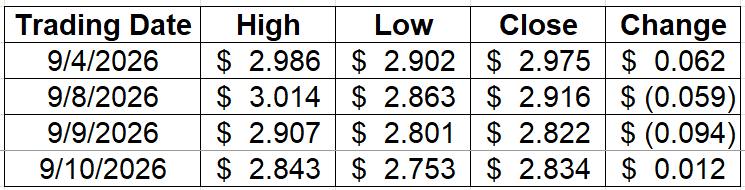
Market Update: Natural gas prices held firm on September 10 after an early-morning dip, with NYMEX October futures closing at $2.834/MMBtu — up nearly 1 cent on the day despite falling as much as 7 cents during the morning session. Prices bounced back on signs of improving market balance: total supply for the week ended September 4 reached approximately 117 Bcf/d, while demand climbed to roughly 113.8 Bcf/d, boosted by a pickup in LNG feedgas deliveries to nearly 20 Bcf/d and stronger power generation demand. The Platts national average cash price settled at $2.650/MMBtu for September 11 flows.
The bigger picture heading into fall is one of a well-supplied market with prices under moderate pressure. Above-normal temperatures across much of the Central and Eastern U.S. have kept power demand elevated through early September, but that support is expected to fade as weather moderates. The EIA’s September 9 Short-Term Energy Outlook projects end-of-season storage at 3.969 Tcf — about 5% above the five-year average — leaving the market with a comfortable supply cushion heading into winter. On the infrastructure side, FERC approved the 1.175 Bcf/d Kosciusko Junction Pipeline in Mississippi and a 627,000 Dth/d capacity increase on the Gator Express pipeline serving Plaquemines LNG, adding to the continued buildout of Gulf Coast export capacity.
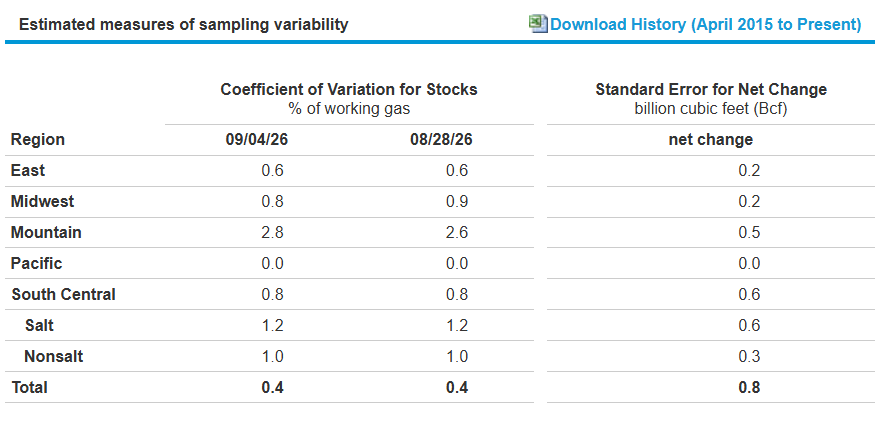
Storage Report: The EIA reported a 40 Bcf injection for the week ending September 4, above the Platts analyst consensus of 34 Bcf but below the five-year average build of 52 Bcf for the corresponding week. Total working gas in storage stands at 3.254 Tcf — a surplus of 148 Bcf above the 2021–2025 five-year average, down from a 160 Bcf surplus the prior week — and 79 Bcf, or 2.4%, below year-ago levels.


Weather: NOAA's 6–10 day outlook (valid September 16–20, issued September 10) shows above-normal temperatures persisting across much of the West, while the East is expected to cool down mid-period as a weather system moves through — bringing near- to below-normal readings across the Upper Midwest and Northeast. The cooler signal in the East points to an early start to shoulder season and should ease power generation demand heading into October.

Market Data:
September 11, 2026

Weekly Energy News
September 11, 2026
Market Update: Natural gas prices held firm on September 10 after an early-morning dip, with NYMEX October futures closing at $2.834/MMBtu — up nearly 1 cent on the day despite falling as much as 7 cents during the morning session. Prices bounced back on signs of improving market balance: total supply for the week ended September 4 reached approximately 117 Bcf/d, while demand climbed to roughly 113.8 Bcf/d, boosted by a pickup in LNG feedgas deliveries to nearly 20 Bcf/d and stronger power generation demand. The Platts national average cash price settled at $2.650/MMBtu for September 11 flows.
The bigger picture heading into fall is one of a well-supplied market with prices under moderate pressure. Above-normal temperatures across much of the Central and Eastern U.S. have kept power demand elevated through early September, but that support is expected to fade as weather moderates. The EIA’s September 9 Short-Term Energy Outlook projects end-of-season storage at 3.969 Tcf — about 5% above the five-year average — leaving the market with a comfortable supply cushion heading into winter. On the infrastructure side, FERC approved the 1.175 Bcf/d Kosciusko Junction Pipeline in Mississippi and a 627,000 Dth/d capacity increase on the Gator Express pipeline serving Plaquemines LNG, adding to the continued buildout of Gulf Coast export capacity.
Storage Report: The EIA reported a 40 Bcf injection for the week ending September 4, above the Platts analyst consensus of 34 Bcf but below the five-year average build of 52 Bcf for the corresponding week. Total working gas in storage stands at 3.254 Tcf — a surplus of 148 Bcf above the 2021–2025 five-year average, down from a 160 Bcf surplus the prior week — and 79 Bcf, or 2.4%, below year-ago levels.
Weather: NOAA's 6–10 day outlook (valid September 16–20, issued September 10) shows above-normal temperatures persisting across much of the West, while the East is expected to cool down mid-period as a weather system moves through — bringing near- to below-normal readings across the Upper Midwest and Northeast. The cooler signal in the East points to an early start to shoulder season and should ease power generation demand heading into October.
Market Data:
September 11, 2026
September 11, 2026
Weekly Energy News
Market Update: Natural gas prices held firm on September 10 after an early-morning dip, with NYMEX October futures closing at $2.834/MMBtu — up nearly 1 cent on the day despite falling as much as 7 cents during the morning session. Prices bounced back on signs of improving market balance: total supply for the week ended September 4 reached approximately 117 Bcf/d, while demand climbed to roughly 113.8 Bcf/d, boosted by a pickup in LNG feedgas deliveries to nearly 20 Bcf/d and stronger power generation demand. The Platts national average cash price settled at $2.650/MMBtu for September 11 flows.
The bigger picture heading into fall is one of a well-supplied market with prices under moderate pressure. Above-normal temperatures across much of the Central and Eastern U.S. have kept power demand elevated through early September, but that support is expected to fade as weather moderates. The EIA’s September 9 Short-Term Energy Outlook projects end-of-season storage at 3.969 Tcf — about 5% above the five-year average — leaving the market with a comfortable supply cushion heading into winter. On the infrastructure side, FERC approved the 1.175 Bcf/d Kosciusko Junction Pipeline in Mississippi and a 627,000 Dth/d capacity increase on the Gator Express pipeline serving Plaquemines LNG, adding to the continued buildout of Gulf Coast export capacity.
Storage Report: The EIA reported a 40 Bcf injection for the week ending September 4, above the Platts analyst consensus of 34 Bcf but below the five-year average build of 52 Bcf for the corresponding week. Total working gas in storage stands at 3.254 Tcf — a surplus of 148 Bcf above the 2021–2025 five-year average, down from a 160 Bcf surplus the prior week — and 79 Bcf, or 2.4%, below year-ago levels.
Weather: NOAA's 6–10 day outlook (valid September 16–20, issued September 10) shows above-normal temperatures persisting across much of the West, while the East is expected to cool down mid-period as a weather system moves through — bringing near- to below-normal readings across the Upper Midwest and Northeast. The cooler signal in the East points to an early start to shoulder season and should ease power generation demand heading into October.
September 11, 2026
Weekly Energy News
Market Update: Natural gas prices held firm on September 10 after an early-morning dip, with NYMEX October futures closing at $2.834/MMBtu — up nearly 1 cent on the day despite falling as much as 7 cents during the morning session. Prices bounced back on signs of improving market balance: total supply for the week ended September 4 reached approximately 117 Bcf/d, while demand climbed to roughly 113.8 Bcf/d, boosted by a pickup in LNG feedgas deliveries to nearly 20 Bcf/d and stronger power generation demand. The Platts national average cash price settled at $2.650/MMBtu for September 11 flows.
The bigger picture heading into fall is one of a well-supplied market with prices under moderate pressure. Above-normal temperatures across much of the Central and Eastern U.S. have kept power demand elevated through early September, but that support is expected to fade as weather moderates. The EIA’s September 9 Short-Term Energy Outlook projects end-of-season storage at 3.969 Tcf — about 5% above the five-year average — leaving the market with a comfortable supply cushion heading into winter. On the infrastructure side, FERC approved the 1.175 Bcf/d Kosciusko Junction Pipeline in Mississippi and a 627,000 Dth/d capacity increase on the Gator Express pipeline serving Plaquemines LNG, adding to the continued buildout of Gulf Coast export capacity.
Storage Report: The EIA reported a 40 Bcf injection for the week ending September 4, above the Platts analyst consensus of 34 Bcf but below the five-year average build of 52 Bcf for the corresponding week. Total working gas in storage stands at 3.254 Tcf — a surplus of 148 Bcf above the 2021–2025 five-year average, down from a 160 Bcf surplus the prior week — and 79 Bcf, or 2.4%, below year-ago levels.
Weather: NOAA's 6–10 day outlook (valid September 16–20, issued September 10) shows above-normal temperatures persisting across much of the West, while the East is expected to cool down mid-period as a weather system moves through — bringing near- to below-normal readings across the Upper Midwest and Northeast. The cooler signal in the East points to an early start to shoulder season and should ease power generation demand heading into October.
September 11, 2026
Weekly Energy News
Market Update: Natural gas prices held firm on September 10 after an early-morning dip, with NYMEX October futures closing at $2.834/MMBtu — up nearly 1 cent on the day despite falling as much as 7 cents during the morning session. Prices bounced back on signs of improving market balance: total supply for the week ended September 4 reached approximately 117 Bcf/d, while demand climbed to roughly 113.8 Bcf/d, boosted by a pickup in LNG feedgas deliveries to nearly 20 Bcf/d and stronger power generation demand. The Platts national average cash price settled at $2.650/MMBtu for September 11 flows.
The bigger picture heading into fall is one of a well-supplied market with prices under moderate pressure. Above-normal temperatures across much of the Central and Eastern U.S. have kept power demand elevated through early September, but that support is expected to fade as weather moderates. The EIA’s September 9 Short-Term Energy Outlook projects end-of-season storage at 3.969 Tcf — about 5% above the five-year average — leaving the market with a comfortable supply cushion heading into winter. On the infrastructure side, FERC approved the 1.175 Bcf/d Kosciusko Junction Pipeline in Mississippi and a 627,000 Dth/d capacity increase on the Gator Express pipeline serving Plaquemines LNG, adding to the continued buildout of Gulf Coast export capacity.
Storage Report: The EIA reported a 40 Bcf injection for the week ending September 4, above the Platts analyst consensus of 34 Bcf but below the five-year average build of 52 Bcf for the corresponding week. Total working gas in storage stands at 3.254 Tcf — a surplus of 148 Bcf above the 2021–2025 five-year average, down from a 160 Bcf surplus the prior week — and 79 Bcf, or 2.4%, below year-ago levels.
Weather: NOAA's 6–10 day outlook (valid September 16–20, issued September 10) shows above-normal temperatures persisting across much of the West, while the East is expected to cool down mid-period as a weather system moves through — bringing near- to below-normal readings across the Upper Midwest and Northeast. The cooler signal in the East points to an early start to shoulder season and should ease power generation demand heading into October.

September 11, 2026
Market Update: Natural gas prices held firm on September 10 after an early-morning dip, with NYMEX October futures closing at $2.834/MMBtu — up nearly 1 cent on the day despite falling as much as 7 cents during the morning session. Prices bounced back on signs of improving market balance: total supply for the week ended September 4 reached approximately 117 Bcf/d, while demand climbed to roughly 113.8 Bcf/d, boosted by a pickup in LNG feedgas deliveries to nearly 20 Bcf/d and stronger power generation demand. The Platts national average cash price settled at $2.650/MMBtu for September 11 flows.
The bigger picture heading into fall is one of a well-supplied market with prices under moderate pressure. Above-normal temperatures across much of the Central and Eastern U.S. have kept power demand elevated through early September, but that support is expected to fade as weather moderates. The EIA’s September 9 Short-Term Energy Outlook projects end-of-season storage at 3.969 Tcf — about 5% above the five-year average — leaving the market with a comfortable supply cushion heading into winter. On the infrastructure side, FERC approved the 1.175 Bcf/d Kosciusko Junction Pipeline in Mississippi and a 627,000 Dth/d capacity increase on the Gator Express pipeline serving Plaquemines LNG, adding to the continued buildout of Gulf Coast export capacity.
Storage Report: The EIA reported a 40 Bcf injection for the week ending September 4, above the Platts analyst consensus of 34 Bcf but below the five-year average build of 52 Bcf for the corresponding week. Total working gas in storage stands at 3.254 Tcf — a surplus of 148 Bcf above the 2021–2025 five-year average, down from a 160 Bcf surplus the prior week — and 79 Bcf, or 2.4%, below year-ago levels.
Weather: NOAA's 6–10 day outlook (valid September 16–20, issued September 10) shows above-normal temperatures persisting across much of the West, while the East is expected to cool down mid-period as a weather system moves through — bringing near- to below-normal readings across the Upper Midwest and Northeast. The cooler signal in the East points to an early start to shoulder season and should ease power generation demand heading into October.
September 11, 2026
Weekly Energy News
Market Update: Natural gas prices held firm on September 10 after an early-morning dip, with NYMEX October futures closing at $2.834/MMBtu — up nearly 1 cent on the day despite falling as much as 7 cents during the morning session. Prices bounced back on signs of improving market balance: total supply for the week ended September 4 reached approximately 117 Bcf/d, while demand climbed to roughly 113.8 Bcf/d, boosted by a pickup in LNG feedgas deliveries to nearly 20 Bcf/d and stronger power generation demand. The Platts national average cash price settled at $2.650/MMBtu for September 11 flows.
The bigger picture heading into fall is one of a well-supplied market with prices under moderate pressure. Above-normal temperatures across much of the Central and Eastern U.S. have kept power demand elevated through early September, but that support is expected to fade as weather moderates. The EIA’s September 9 Short-Term Energy Outlook projects end-of-season storage at 3.969 Tcf — about 5% above the five-year average — leaving the market with a comfortable supply cushion heading into winter. On the infrastructure side, FERC approved the 1.175 Bcf/d Kosciusko Junction Pipeline in Mississippi and a 627,000 Dth/d capacity increase on the Gator Express pipeline serving Plaquemines LNG, adding to the continued buildout of Gulf Coast export capacity.
Storage Report: The EIA reported a 40 Bcf injection for the week ending September 4, above the Platts analyst consensus of 34 Bcf but below the five-year average build of 52 Bcf for the corresponding week. Total working gas in storage stands at 3.254 Tcf — a surplus of 148 Bcf above the 2021–2025 five-year average, down from a 160 Bcf surplus the prior week — and 79 Bcf, or 2.4%, below year-ago levels.
Weather: NOAA's 6–10 day outlook (valid September 16–20, issued September 10) shows above-normal temperatures persisting across much of the West, while the East is expected to cool down mid-period as a weather system moves through — bringing near- to below-normal readings across the Upper Midwest and Northeast. The cooler signal in the East points to an early start to shoulder season and should ease power generation demand heading into October.
September 11, 2026
Weekly Energy News
Market Update: Natural gas prices held firm on September 10 after an early-morning dip, with NYMEX October futures closing at $2.834/MMBtu — up nearly 1 cent on the day despite falling as much as 7 cents during the morning session. Prices bounced back on signs of improving market balance: total supply for the week ended September 4 reached approximately 117 Bcf/d, while demand climbed to roughly 113.8 Bcf/d, boosted by a pickup in LNG feedgas deliveries to nearly 20 Bcf/d and stronger power generation demand. The Platts national average cash price settled at $2.650/MMBtu for September 11 flows.
The bigger picture heading into fall is one of a well-supplied market with prices under moderate pressure. Above-normal temperatures across much of the Central and Eastern U.S. have kept power demand elevated through early September, but that support is expected to fade as weather moderates. The EIA’s September 9 Short-Term Energy Outlook projects end-of-season storage at 3.969 Tcf — about 5% above the five-year average — leaving the market with a comfortable supply cushion heading into winter. On the infrastructure side, FERC approved the 1.175 Bcf/d Kosciusko Junction Pipeline in Mississippi and a 627,000 Dth/d capacity increase on the Gator Express pipeline serving Plaquemines LNG, adding to the continued buildout of Gulf Coast export capacity.
Storage Report: The EIA reported a 40 Bcf injection for the week ending September 4, above the Platts analyst consensus of 34 Bcf but below the five-year average build of 52 Bcf for the corresponding week. Total working gas in storage stands at 3.254 Tcf — a surplus of 148 Bcf above the 2021–2025 five-year average, down from a 160 Bcf surplus the prior week — and 79 Bcf, or 2.4%, below year-ago levels.
Weather: NOAA's 6–10 day outlook (valid September 16–20, issued September 10) shows above-normal temperatures persisting across much of the West, while the East is expected to cool down mid-period as a weather system moves through — bringing near- to below-normal readings across the Upper Midwest and Northeast. The cooler signal in the East points to an early start to shoulder season and should ease power generation demand heading into October.
Make Your Choice Gas Selection in Three Easy Steps
Click here to access our online tool, or call our Choice gas commodity experts at 1 (877) 790-4990.
Step 1: Enter your account number
- Your Black Hills Energy account number is located at the top right-hand corner of your bill.
Step 2: Review price options and make your selection
Step 3: Confirm your selection and enter your control number
- You received a control number in your 2026 Choice Gas selection packet mailed to you from Black Hills Energy. If you cannot locate this, you can retrieve your control number by calling 877-245-3506 or visit choicegas.com
Once enrolled, you will be removed from supplier marketing communications within 24 hours.


Sign Up for Our Energy Newsletters
Sign UpRecent Posts