July 31, 2026
Weekly Energy News
Market Update: The EIA reported a 28 Bcf injection for the week ending July 24 — the smallest build of the injection season and well below the ~33 Bcf market estimate. The bullish surprise briefly lifted the NYMEX September 2026 contract 2–3 cents, and it settled at $2.758/MMBtu (+$0.036) on July 30, while Henry Hub day-ahead cash traded at $2.64/MMBtu. The tight build was driven by strong LNG feedgas demand (~18.1 Bcf/d) and elevated power burn, which pushed the South Central region to its first net withdrawal (-9 Bcf) since late March.
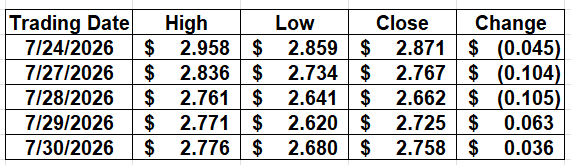
Despite the bullish print, the broader outlook remains rangebound. Storage injections have trended lower for five consecutive weeks, yet prices have struggled to sustain any meaningful rally.
EIA Storage Report: As of July 24, 2026, total working gas stood at 3,084 Bcf — up 28 Bcf on the week, 185 Bcf above the 5-year average (+6.4%), and 32 Bcf below year-ago levels (-1%).


Weather: The NOAA 6–10 day outlook (August 5–9) favors above-normal temperatures across the South, Southwest, and Southeast —supportive of continued power burn — with below-normal readings in the northern Plains and upper Midwest. However, heat is fading from mid-July peaks and should keep next week's injection near the 5-year average, maintaining the current comfortable surplus without providing a clear bullish catalyst.

Market Data:
July 31, 2026

Weekly Energy News
July 31, 2026
Market Update: The EIA reported a 28 Bcf injection for the week ending July 24 — the smallest build of the injection season and well below the ~33 Bcf market estimate. The bullish surprise briefly lifted the NYMEX September 2026 contract 2–3 cents, and it settled at $2.758/MMBtu (+$0.036) on July 30, while Henry Hub day-ahead cash traded at $2.64/MMBtu. The tight build was driven by strong LNG feedgas demand (~18.1 Bcf/d) and elevated power burn, which pushed the South Central region to its first net withdrawal (-9 Bcf) since late March.
Despite the bullish print, the broader outlook remains rangebound. Storage injections have trended lower for five consecutive weeks, yet prices have struggled to sustain any meaningful rally.
EIA Storage Report: As of July 24, 2026, total working gas stood at 3,084 Bcf — up 28 Bcf on the week, 185 Bcf above the 5-year average (+6.4%), and 32 Bcf below year-ago levels (-1%).
Weather: The NOAA 6–10 day outlook (August 5–9) favors above-normal temperatures across the South, Southwest, and Southeast —supportive of continued power burn — with below-normal readings in the northern Plains and upper Midwest. However, heat is fading from mid-July peaks and should keep next week's injection near the 5-year average, maintaining the current comfortable surplus without providing a clear bullish catalyst.
Market Data:
July 31, 2026
July 31, 2026
Weekly Energy News
Market Update: The EIA reported a 28 Bcf injection for the week ending July 24 — the smallest build of the injection season and well below the ~33 Bcf market estimate. The bullish surprise briefly lifted the NYMEX September 2026 contract 2–3 cents, and it settled at $2.758/MMBtu (+$0.036) on July 30, while Henry Hub day-ahead cash traded at $2.64/MMBtu. The tight build was driven by strong LNG feedgas demand (~18.1 Bcf/d) and elevated power burn, which pushed the South Central region to its first net withdrawal (-9 Bcf) since late March.
Despite the bullish print, the broader outlook remains rangebound. Storage injections have trended lower for five consecutive weeks, yet prices have struggled to sustain any meaningful rally.
EIA Storage Report: As of July 24, 2026, total working gas stood at 3,084 Bcf — up 28 Bcf on the week, 185 Bcf above the 5-year average (+6.4%), and 32 Bcf below year-ago levels (-1%).
Weather: The NOAA 6–10 day outlook (August 5–9) favors above-normal temperatures across the South, Southwest, and Southeast —supportive of continued power burn — with below-normal readings in the northern Plains and upper Midwest. However, heat is fading from mid-July peaks and should keep next week's injection near the 5-year average, maintaining the current comfortable surplus without providing a clear bullish catalyst.
July 31, 2026
Weekly Energy News
Market Update: The EIA reported a 28 Bcf injection for the week ending July 24 — the smallest build of the injection season and well below the ~33 Bcf market estimate. The bullish surprise briefly lifted the NYMEX September 2026 contract 2–3 cents, and it settled at $2.758/MMBtu (+$0.036) on July 30, while Henry Hub day-ahead cash traded at $2.64/MMBtu. The tight build was driven by strong LNG feedgas demand (~18.1 Bcf/d) and elevated power burn, which pushed the South Central region to its first net withdrawal (-9 Bcf) since late March.
Despite the bullish print, the broader outlook remains rangebound. Storage injections have trended lower for five consecutive weeks, yet prices have struggled to sustain any meaningful rally.
EIA Storage Report: As of July 24, 2026, total working gas stood at 3,084 Bcf — up 28 Bcf on the week, 185 Bcf above the 5-year average (+6.4%), and 32 Bcf below year-ago levels (-1%).
Weather: The NOAA 6–10 day outlook (August 5–9) favors above-normal temperatures across the South, Southwest, and Southeast —supportive of continued power burn — with below-normal readings in the northern Plains and upper Midwest. However, heat is fading from mid-July peaks and should keep next week's injection near the 5-year average, maintaining the current comfortable surplus without providing a clear bullish catalyst.
July 31, 2026
Weekly Energy News
Market Update: The EIA reported a 28 Bcf injection for the week ending July 24 — the smallest build of the injection season and well below the ~33 Bcf market estimate. The bullish surprise briefly lifted the NYMEX September 2026 contract 2–3 cents, and it settled at $2.758/MMBtu (+$0.036) on July 30, while Henry Hub day-ahead cash traded at $2.64/MMBtu. The tight build was driven by strong LNG feedgas demand (~18.1 Bcf/d) and elevated power burn, which pushed the South Central region to its first net withdrawal (-9 Bcf) since late March.
Despite the bullish print, the broader outlook remains rangebound. Storage injections have trended lower for five consecutive weeks, yet prices have struggled to sustain any meaningful rally.
EIA Storage Report: As of July 24, 2026, total working gas stood at 3,084 Bcf — up 28 Bcf on the week, 185 Bcf above the 5-year average (+6.4%), and 32 Bcf below year-ago levels (-1%).
Weather: The NOAA 6–10 day outlook (August 5–9) favors above-normal temperatures across the South, Southwest, and Southeast —supportive of continued power burn — with below-normal readings in the northern Plains and upper Midwest. However, heat is fading from mid-July peaks and should keep next week's injection near the 5-year average, maintaining the current comfortable surplus without providing a clear bullish catalyst.

July 31, 2026
Market Update: The EIA reported a 28 Bcf injection for the week ending July 24 — the smallest build of the injection season and well below the ~33 Bcf market estimate. The bullish surprise briefly lifted the NYMEX September 2026 contract 2–3 cents, and it settled at $2.758/MMBtu (+$0.036) on July 30, while Henry Hub day-ahead cash traded at $2.64/MMBtu. The tight build was driven by strong LNG feedgas demand (~18.1 Bcf/d) and elevated power burn, which pushed the South Central region to its first net withdrawal (-9 Bcf) since late March.
Despite the bullish print, the broader outlook remains rangebound. Storage injections have trended lower for five consecutive weeks, yet prices have struggled to sustain any meaningful rally.
EIA Storage Report: As of July 24, 2026, total working gas stood at 3,084 Bcf — up 28 Bcf on the week, 185 Bcf above the 5-year average (+6.4%), and 32 Bcf below year-ago levels (-1%).
Weather: The NOAA 6–10 day outlook (August 5–9) favors above-normal temperatures across the South, Southwest, and Southeast —supportive of continued power burn — with below-normal readings in the northern Plains and upper Midwest. However, heat is fading from mid-July peaks and should keep next week's injection near the 5-year average, maintaining the current comfortable surplus without providing a clear bullish catalyst.
July 31, 2026
Weekly Energy News
Market Update: The EIA reported a 28 Bcf injection for the week ending July 24 — the smallest build of the injection season and well below the ~33 Bcf market estimate. The bullish surprise briefly lifted the NYMEX September 2026 contract 2–3 cents, and it settled at $2.758/MMBtu (+$0.036) on July 30, while Henry Hub day-ahead cash traded at $2.64/MMBtu. The tight build was driven by strong LNG feedgas demand (~18.1 Bcf/d) and elevated power burn, which pushed the South Central region to its first net withdrawal (-9 Bcf) since late March.
Despite the bullish print, the broader outlook remains rangebound. Storage injections have trended lower for five consecutive weeks, yet prices have struggled to sustain any meaningful rally.
EIA Storage Report: As of July 24, 2026, total working gas stood at 3,084 Bcf — up 28 Bcf on the week, 185 Bcf above the 5-year average (+6.4%), and 32 Bcf below year-ago levels (-1%).
Weather: The NOAA 6–10 day outlook (August 5–9) favors above-normal temperatures across the South, Southwest, and Southeast —supportive of continued power burn — with below-normal readings in the northern Plains and upper Midwest. However, heat is fading from mid-July peaks and should keep next week's injection near the 5-year average, maintaining the current comfortable surplus without providing a clear bullish catalyst.
July 31, 2026
Weekly Energy News
Market Update: The EIA reported a 28 Bcf injection for the week ending July 24 — the smallest build of the injection season and well below the ~33 Bcf market estimate. The bullish surprise briefly lifted the NYMEX September 2026 contract 2–3 cents, and it settled at $2.758/MMBtu (+$0.036) on July 30, while Henry Hub day-ahead cash traded at $2.64/MMBtu. The tight build was driven by strong LNG feedgas demand (~18.1 Bcf/d) and elevated power burn, which pushed the South Central region to its first net withdrawal (-9 Bcf) since late March.
Despite the bullish print, the broader outlook remains rangebound. Storage injections have trended lower for five consecutive weeks, yet prices have struggled to sustain any meaningful rally.
EIA Storage Report: As of July 24, 2026, total working gas stood at 3,084 Bcf — up 28 Bcf on the week, 185 Bcf above the 5-year average (+6.4%), and 32 Bcf below year-ago levels (-1%).
Weather: The NOAA 6–10 day outlook (August 5–9) favors above-normal temperatures across the South, Southwest, and Southeast —supportive of continued power burn — with below-normal readings in the northern Plains and upper Midwest. However, heat is fading from mid-July peaks and should keep next week's injection near the 5-year average, maintaining the current comfortable surplus without providing a clear bullish catalyst.
Make Your Choice Gas Selection in Three Easy Steps
Click here to access our online tool, or call our Choice gas commodity experts at 1 (877) 790-4990.
Step 1: Enter your account number
- Your Black Hills Energy account number is located at the top right-hand corner of your bill.
Step 2: Review price options and make your selection
Step 3: Confirm your selection and enter your control number
- You received a control number in your 2026 Choice Gas selection packet mailed to you from Black Hills Energy. If you cannot locate this, you can retrieve your control number by calling 877-245-3506 or visit choicegas.com
Once enrolled, you will be removed from supplier marketing communications within 24 hours.


Sign Up for Our Energy Newsletters
Sign UpRecent Posts