August 28, 2026
Weekly Energy News
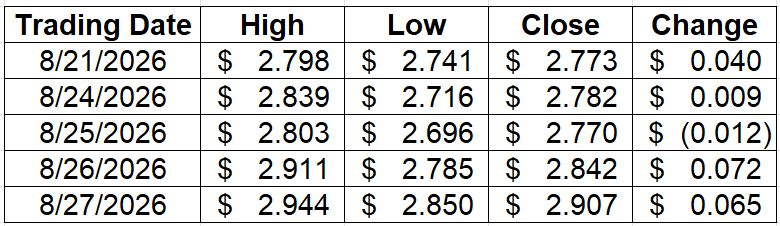
Market Update: Natural gas prices moved higher this week on a combination of tighter-than-expected storage, surging LNG export demand, and extreme heat across the Desert Southwest. The NYMEX October contract settled near $2.91/MMBtu on August 27, recovering from the multi-month lows seen earlier in the month. The biggest driver was Freeport LNG completing its maintenance turnaround — feedgas demand jumped to its highest level since early July, signaling that US export capacity is back online and pulling hard on domestic supply.
The rally has staying power, driven by a rebound in LNG export demand. Regional supply remains tight heading into September: pipeline constraints in the Southwest — including an ongoing curtailment on EPNG and a low linepack warning on Kern River — are keeping pressure on spot prices in that region. Nationally, traders who have been heavily positioned short face growing risk of a squeeze if warm weather and strong LNG demand continue into fall.
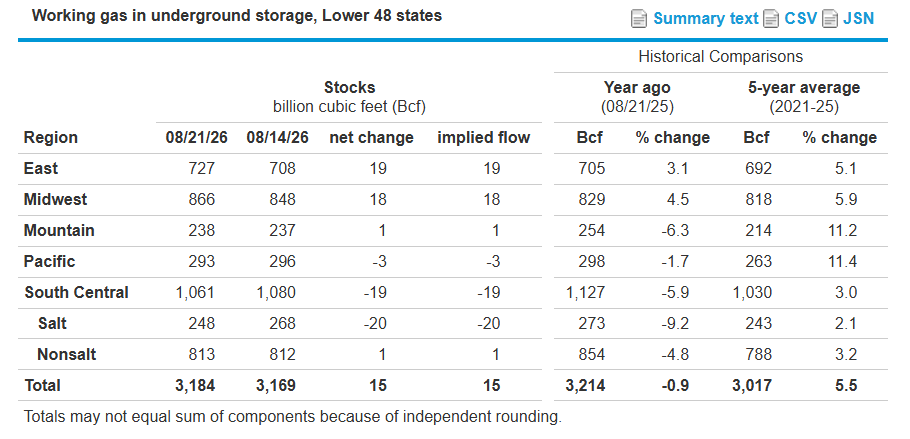
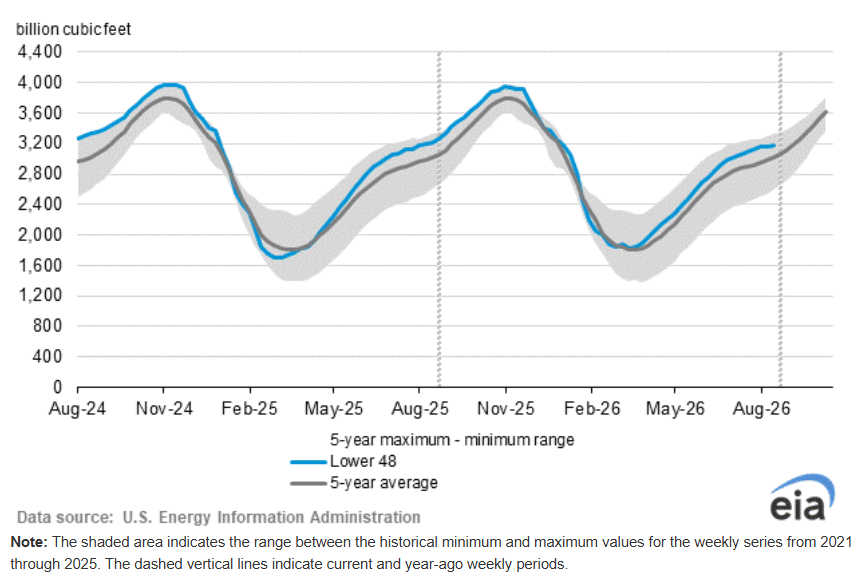
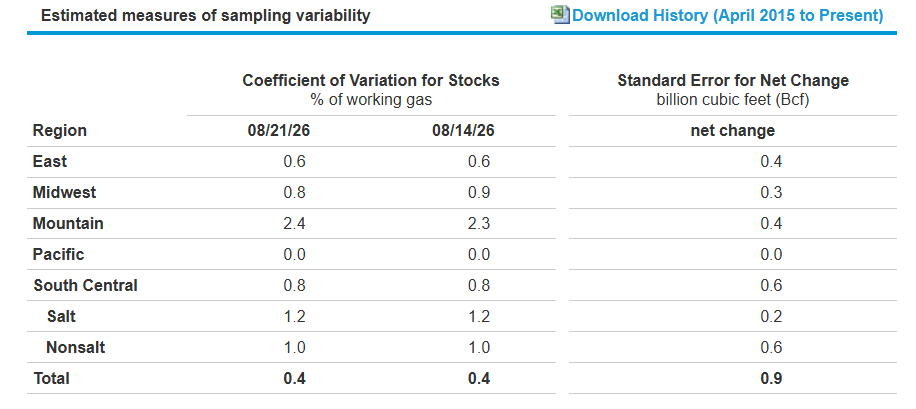
Storage Report: The EIA reported a much smaller injection than expected for the week ending August 21 — a bullish surprise that confirmed demand has been running stronger than the market anticipated. The South Central region actually drew down storage rather than adding to it, an unusual occurrence for this time of year driven by the intense summer heat across Texas and the Gulf Coast. Overall inventories remain above the five-year average, but the gap narrowed on the print.
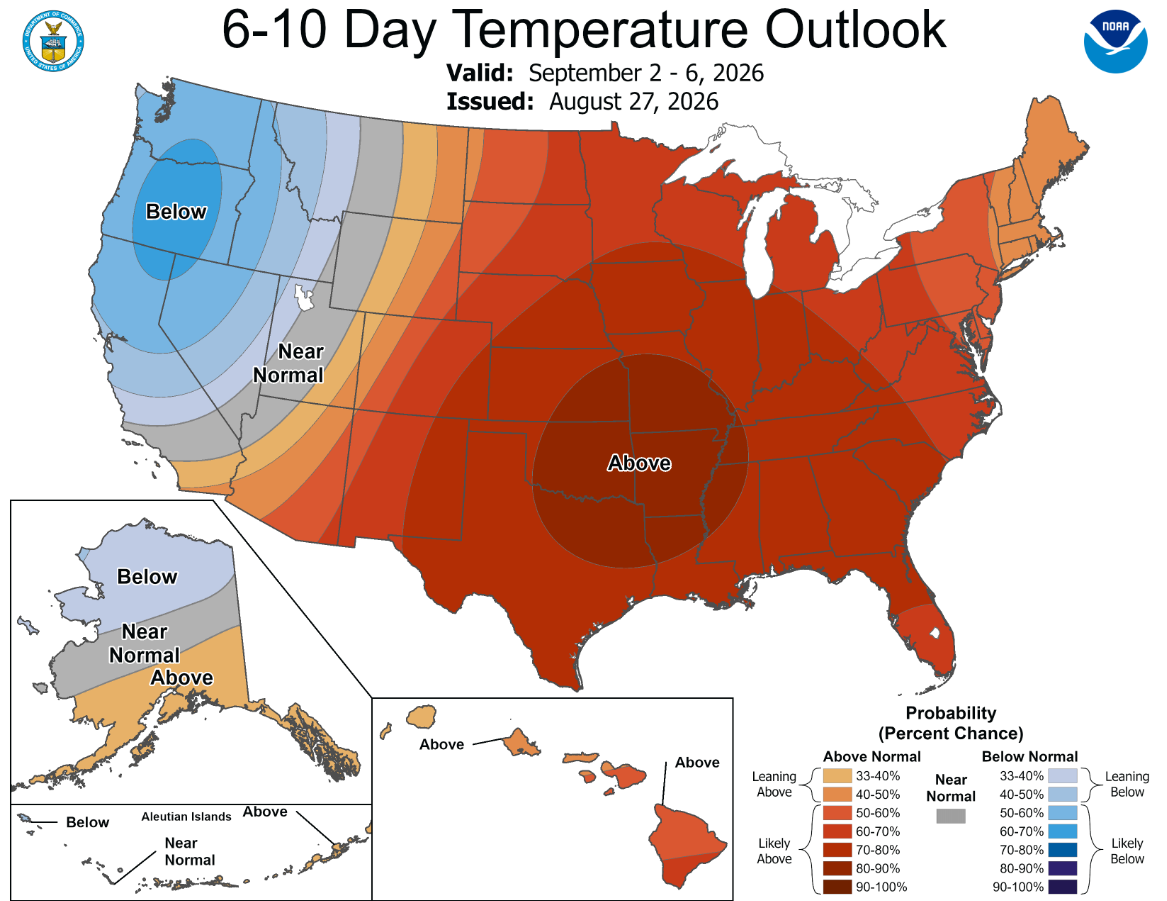
Weather: NOAA's 6–10 day outlook calls for above-normal temperatures across most of the south-central and eastern US through early September — good news for continued power demand and storage draws. The Desert Southwest is in the middle of a significant heat event, with Phoenix under an extreme heat warning and spot gas prices in that region hitting seven-month highs this week.
Market Data:
August 28, 2026
Weekly Energy News
August 28, 2026
Market Update: Natural gas prices moved higher this week on a combination of tighter-than-expected storage, surging LNG export demand, and extreme heat across the Desert Southwest. The NYMEX October contract settled near $2.91/MMBtu on August 27, recovering from the multi-month lows seen earlier in the month. The biggest driver was Freeport LNG completing its maintenance turnaround — feedgas demand jumped to its highest level since early July, signaling that US export capacity is back online and pulling hard on domestic supply.
The rally has staying power, driven by a rebound in LNG export demand. Regional supply remains tight heading into September: pipeline constraints in the Southwest — including an ongoing curtailment on EPNG and a low linepack warning on Kern River — are keeping pressure on spot prices in that region. Nationally, traders who have been heavily positioned short face growing risk of a squeeze if warm weather and strong LNG demand continue into fall.
Storage Report: The EIA reported a much smaller injection than expected for the week ending August 21 — a bullish surprise that confirmed demand has been running stronger than the market anticipated. The South Central region actually drew down storage rather than adding to it, an unusual occurrence for this time of year driven by the intense summer heat across Texas and the Gulf Coast. Overall inventories remain above the five-year average, but the gap narrowed on the print.
Weather: NOAA's 6–10 day outlook calls for above-normal temperatures across most of the south-central and eastern US through early September — good news for continued power demand and storage draws. The Desert Southwest is in the middle of a significant heat event, with Phoenix under an extreme heat warning and spot gas prices in that region hitting seven-month highs this week.
Market Data:
August 28, 2026
August 28, 2026
Weekly Energy News
Market Update: Natural gas prices moved higher this week on a combination of tighter-than-expected storage, surging LNG export demand, and extreme heat across the Desert Southwest. The NYMEX October contract settled near $2.91/MMBtu on August 27, recovering from the multi-month lows seen earlier in the month. The biggest driver was Freeport LNG completing its maintenance turnaround — feedgas demand jumped to its highest level since early July, signaling that US export capacity is back online and pulling hard on domestic supply.
The rally has staying power, driven by a rebound in LNG export demand. Regional supply remains tight heading into September: pipeline constraints in the Southwest — including an ongoing curtailment on EPNG and a low linepack warning on Kern River — are keeping pressure on spot prices in that region. Nationally, traders who have been heavily positioned short face growing risk of a squeeze if warm weather and strong LNG demand continue into fall.
Storage Report: The EIA reported a much smaller injection than expected for the week ending August 21 — a bullish surprise that confirmed demand has been running stronger than the market anticipated. The South Central region actually drew down storage rather than adding to it, an unusual occurrence for this time of year driven by the intense summer heat across Texas and the Gulf Coast. Overall inventories remain above the five-year average, but the gap narrowed on the print.
Weather: NOAA's 6–10 day outlook calls for above-normal temperatures across most of the south-central and eastern US through early September — good news for continued power demand and storage draws. The Desert Southwest is in the middle of a significant heat event, with Phoenix under an extreme heat warning and spot gas prices in that region hitting seven-month highs this week.
August 28, 2026
Weekly Energy News
Market Update: Natural gas prices moved higher this week on a combination of tighter-than-expected storage, surging LNG export demand, and extreme heat across the Desert Southwest. The NYMEX October contract settled near $2.91/MMBtu on August 27, recovering from the multi-month lows seen earlier in the month. The biggest driver was Freeport LNG completing its maintenance turnaround — feedgas demand jumped to its highest level since early July, signaling that US export capacity is back online and pulling hard on domestic supply.
The rally has staying power, driven by a rebound in LNG export demand. Regional supply remains tight heading into September: pipeline constraints in the Southwest — including an ongoing curtailment on EPNG and a low linepack warning on Kern River — are keeping pressure on spot prices in that region. Nationally, traders who have been heavily positioned short face growing risk of a squeeze if warm weather and strong LNG demand continue into fall.
Storage Report: The EIA reported a much smaller injection than expected for the week ending August 21 — a bullish surprise that confirmed demand has been running stronger than the market anticipated. The South Central region actually drew down storage rather than adding to it, an unusual occurrence for this time of year driven by the intense summer heat across Texas and the Gulf Coast. Overall inventories remain above the five-year average, but the gap narrowed on the print.
Weather: NOAA's 6–10 day outlook calls for above-normal temperatures across most of the south-central and eastern US through early September — good news for continued power demand and storage draws. The Desert Southwest is in the middle of a significant heat event, with Phoenix under an extreme heat warning and spot gas prices in that region hitting seven-month highs this week.
August 28, 2026
Weekly Energy News
Market Update: Natural gas prices moved higher this week on a combination of tighter-than-expected storage, surging LNG export demand, and extreme heat across the Desert Southwest. The NYMEX October contract settled near $2.91/MMBtu on August 27, recovering from the multi-month lows seen earlier in the month. The biggest driver was Freeport LNG completing its maintenance turnaround — feedgas demand jumped to its highest level since early July, signaling that US export capacity is back online and pulling hard on domestic supply.
The rally has staying power, driven by a rebound in LNG export demand. Regional supply remains tight heading into September: pipeline constraints in the Southwest — including an ongoing curtailment on EPNG and a low linepack warning on Kern River — are keeping pressure on spot prices in that region. Nationally, traders who have been heavily positioned short face growing risk of a squeeze if warm weather and strong LNG demand continue into fall.
Storage Report: The EIA reported a much smaller injection than expected for the week ending August 21 — a bullish surprise that confirmed demand has been running stronger than the market anticipated. The South Central region actually drew down storage rather than adding to it, an unusual occurrence for this time of year driven by the intense summer heat across Texas and the Gulf Coast. Overall inventories remain above the five-year average, but the gap narrowed on the print.
Weather: NOAA's 6–10 day outlook calls for above-normal temperatures across most of the south-central and eastern US through early September — good news for continued power demand and storage draws. The Desert Southwest is in the middle of a significant heat event, with Phoenix under an extreme heat warning and spot gas prices in that region hitting seven-month highs this week.

August 28, 2026
Market Update: Natural gas prices moved higher this week on a combination of tighter-than-expected storage, surging LNG export demand, and extreme heat across the Desert Southwest. The NYMEX October contract settled near $2.91/MMBtu on August 27, recovering from the multi-month lows seen earlier in the month. The biggest driver was Freeport LNG completing its maintenance turnaround — feedgas demand jumped to its highest level since early July, signaling that US export capacity is back online and pulling hard on domestic supply.
The rally has staying power, driven by a rebound in LNG export demand. Regional supply remains tight heading into September: pipeline constraints in the Southwest — including an ongoing curtailment on EPNG and a low linepack warning on Kern River — are keeping pressure on spot prices in that region. Nationally, traders who have been heavily positioned short face growing risk of a squeeze if warm weather and strong LNG demand continue into fall.
Storage Report: The EIA reported a much smaller injection than expected for the week ending August 21 — a bullish surprise that confirmed demand has been running stronger than the market anticipated. The South Central region actually drew down storage rather than adding to it, an unusual occurrence for this time of year driven by the intense summer heat across Texas and the Gulf Coast. Overall inventories remain above the five-year average, but the gap narrowed on the print.
Weather: NOAA's 6–10 day outlook calls for above-normal temperatures across most of the south-central and eastern US through early September — good news for continued power demand and storage draws. The Desert Southwest is in the middle of a significant heat event, with Phoenix under an extreme heat warning and spot gas prices in that region hitting seven-month highs this week.
August 28, 2026
Weekly Energy News
Market Update: Natural gas prices moved higher this week on a combination of tighter-than-expected storage, surging LNG export demand, and extreme heat across the Desert Southwest. The NYMEX October contract settled near $2.91/MMBtu on August 27, recovering from the multi-month lows seen earlier in the month. The biggest driver was Freeport LNG completing its maintenance turnaround — feedgas demand jumped to its highest level since early July, signaling that US export capacity is back online and pulling hard on domestic supply.
The rally has staying power, driven by a rebound in LNG export demand. Regional supply remains tight heading into September: pipeline constraints in the Southwest — including an ongoing curtailment on EPNG and a low linepack warning on Kern River — are keeping pressure on spot prices in that region. Nationally, traders who have been heavily positioned short face growing risk of a squeeze if warm weather and strong LNG demand continue into fall.
Storage Report: The EIA reported a much smaller injection than expected for the week ending August 21 — a bullish surprise that confirmed demand has been running stronger than the market anticipated. The South Central region actually drew down storage rather than adding to it, an unusual occurrence for this time of year driven by the intense summer heat across Texas and the Gulf Coast. Overall inventories remain above the five-year average, but the gap narrowed on the print.
Weather: NOAA's 6–10 day outlook calls for above-normal temperatures across most of the south-central and eastern US through early September — good news for continued power demand and storage draws. The Desert Southwest is in the middle of a significant heat event, with Phoenix under an extreme heat warning and spot gas prices in that region hitting seven-month highs this week.
August 28, 2026
Weekly Energy News
Market Update: Natural gas prices moved higher this week on a combination of tighter-than-expected storage, surging LNG export demand, and extreme heat across the Desert Southwest. The NYMEX October contract settled near $2.91/MMBtu on August 27, recovering from the multi-month lows seen earlier in the month. The biggest driver was Freeport LNG completing its maintenance turnaround — feedgas demand jumped to its highest level since early July, signaling that US export capacity is back online and pulling hard on domestic supply.
The rally has staying power, driven by a rebound in LNG export demand. Regional supply remains tight heading into September: pipeline constraints in the Southwest — including an ongoing curtailment on EPNG and a low linepack warning on Kern River — are keeping pressure on spot prices in that region. Nationally, traders who have been heavily positioned short face growing risk of a squeeze if warm weather and strong LNG demand continue into fall.
Storage Report: The EIA reported a much smaller injection than expected for the week ending August 21 — a bullish surprise that confirmed demand has been running stronger than the market anticipated. The South Central region actually drew down storage rather than adding to it, an unusual occurrence for this time of year driven by the intense summer heat across Texas and the Gulf Coast. Overall inventories remain above the five-year average, but the gap narrowed on the print.
Weather: NOAA's 6–10 day outlook calls for above-normal temperatures across most of the south-central and eastern US through early September — good news for continued power demand and storage draws. The Desert Southwest is in the middle of a significant heat event, with Phoenix under an extreme heat warning and spot gas prices in that region hitting seven-month highs this week.
Make Your Choice Gas Selection in Three Easy Steps
Click here to access our online tool, or call our Choice gas commodity experts at 1 (877) 790-4990.
Step 1: Enter your account number
- Your Black Hills Energy account number is located at the top right-hand corner of your bill.
Step 2: Review price options and make your selection
Step 3: Confirm your selection and enter your control number
- You received a control number in your 2026 Choice Gas selection packet mailed to you from Black Hills Energy. If you cannot locate this, you can retrieve your control number by calling 877-245-3506 or visit choicegas.com
Once enrolled, you will be removed from supplier marketing communications within 24 hours.


Sign Up for Our Energy Newsletters
Sign UpRecent Posts